
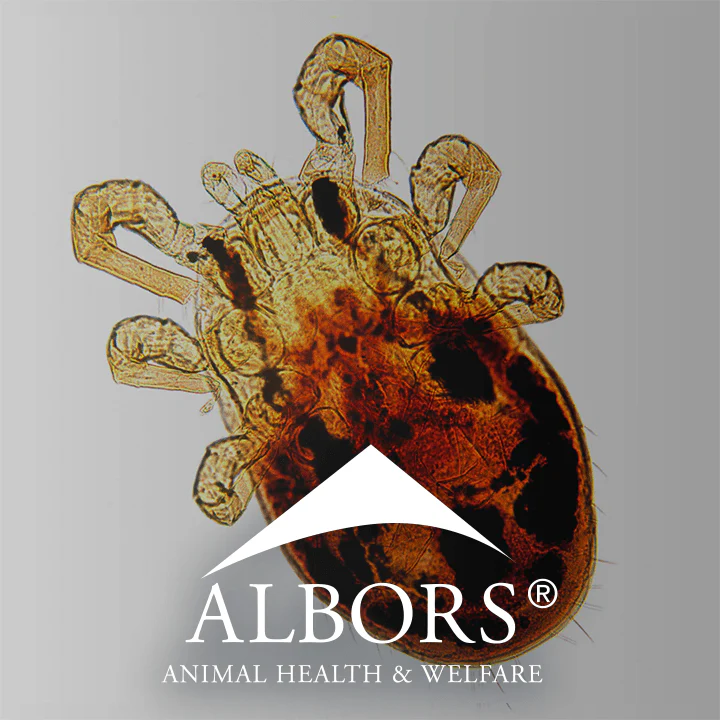
Poultry red mites (Dermanyssus gallinae) are recognised as one of the most damaging parasites affecting the European egg industry. Present in the majority of commercial laying hen farms across Europe, these blood-feeding ectoparasites compromise animal welfare, reduce egg production and generate substantial economic losses every year.
Industry estimates indicate that red mite infestations cost the European poultry sector more than €130 million annually, making them the most expensive poultry pest in Europe. Their impact extends beyond productivity, affecting bird health, farm profitability and biosecurity.
Understanding the Poultry Red Mite
The poultry red mite (Dermanyssus gallinae) is a nocturnal ectoparasite that feeds on the blood of birds, hiding in cracks, equipment and housing structures during the day.
Unlike many other poultry parasites, red mites spend only a short time on the bird while feeding, making infestations difficult to detect during routine inspections.
Their rapid reproductive cycle allows populations to grow quickly, often reaching millions of mites within a single poultry house if left unmanaged.
Why Red Mites Are Such a Serious Problem
Heavy infestations have widespread consequences for both animals and producers.
Common effects include:
- Reduced egg production
- Lower egg quality
- Increased feed conversion ratio
- Blood loss and anaemia
- Stress and behavioural disorders
- Feather pecking and cannibalism
- Reduced fertility in breeder flocks
- Increased mortality in severe infestations
In addition to their direct effects, red mites can act as vectors for several poultry pathogens, increasing the risk of disease transmission within the flock.
The Economic Impact on Poultry Farms
The financial consequences of red mite infestations extend far beyond production losses.
Producers may face:
- Increased veterinary costs.
- Higher labour requirements.
- Reduced laying performance.
- Lower feed efficiency.
- Increased mortality.
- Frequent cleaning and treatment expenses.
- Premature flock replacement.
As infestations become established, treatment becomes increasingly difficult and expensive, making prevention and early intervention essential.
Challenges in Controlling Red Mites
Red mites are notoriously difficult to eliminate because they spend most of their life cycle hidden away from birds.
They can survive for several months without feeding and rapidly recolonise poultry houses after inadequate treatments.
In addition, repeated use of the same chemical products has contributed to the development of resistance in many mite populations, reducing the effectiveness of conventional control methods.
For this reason, modern poultry production increasingly relies on integrated pest management rather than single-product solutions.
An Integrated Red Mite Management Strategy
Successful control requires combining multiple preventive and corrective measures.
Continuous Monitoring
Regular monitoring allows producers to detect infestations before populations reach damaging levels.
Monitoring traps and routine inspections help identify problem areas and evaluate treatment effectiveness.
Farm Hygiene and Cleaning
Effective cleaning between production cycles removes organic matter and reduces potential hiding places for mites.
Particular attention should be paid to:
- Nest boxes
- Perches
- Cage systems
- Cracks and crevices
- Equipment joints
Maintaining good hygiene significantly reduces parasite pressure.
Targeted Control Solutions
Modern red mite control programmes combine different complementary approaches, including:
- Monitoring traps
- Natural repellents
- Surface treatments
- Cleaning and detergent solutions
- Mineral-based control products
Using multiple strategies helps reduce mite populations while limiting the risk of resistance.
Biosecurity Measures
Strong biosecurity helps prevent the introduction and spread of mites between poultry houses.
Recommended practices include:
- Controlled visitor access.
- Equipment disinfection.
- Proper litter management.
- Pest control programmes.
- Regular flock inspections.
Animal Welfare Benefits
Effective red mite control provides important welfare advantages.
Healthier birds experience:
- Lower stress levels.
- Improved resting behaviour.
- Reduced feather damage.
- Better immune function.
- Improved laying performance.
- Greater overall wellbeing.
Protecting birds from parasite infestations directly contributes to more sustainable and responsible poultry production.
Sustainable Red Mite Control
The poultry industry is increasingly moving toward integrated and sustainable parasite management.
Rather than relying solely on chemical treatments, producers are adopting comprehensive programmes that combine monitoring, hygiene, natural control solutions and preventive management.
These strategies help reduce parasite pressure while supporting animal welfare, food safety and environmental sustainability.
Protecting Poultry Production for the Future
As one of Europe’s most costly poultry pests, Dermanyssus gallinae continues to challenge commercial egg production.
However, through early monitoring, effective biosecurity, integrated control programmes and innovative management solutions, producers can significantly reduce the impact of red mite infestations.
Investing in prevention not only protects flock health and productivity but also supports a more resilient, efficient and sustainable poultry industry for the future.